ORTHODONTICS Article
Maximizing Clear Aligner Efficiency with Attachments
Dr. Shalin Shah
CDOCS Faculty

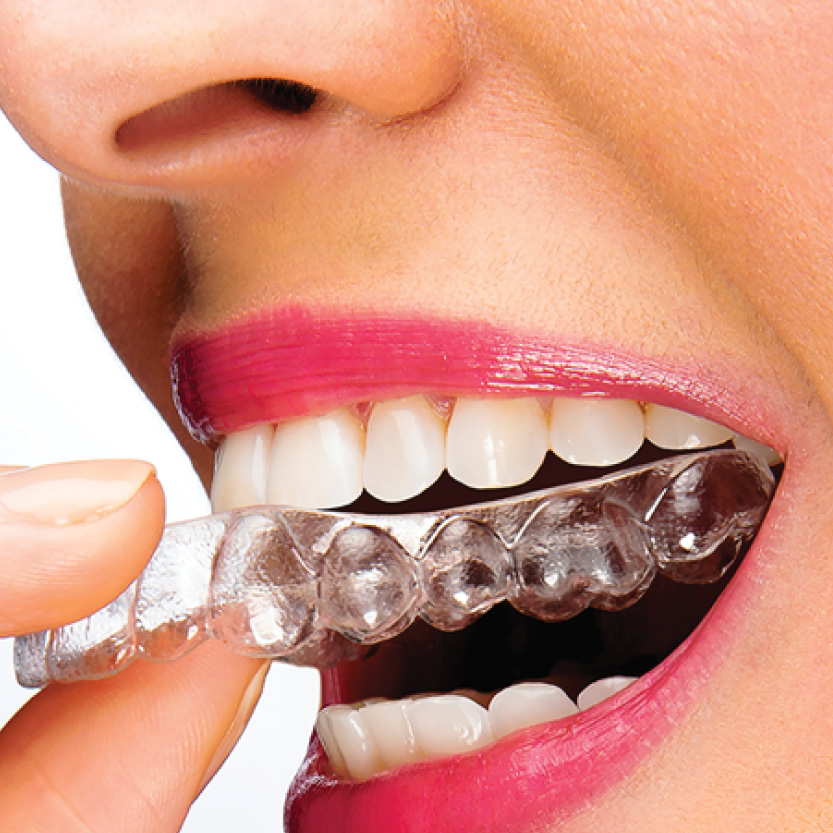
Clear aligners have transformed orthodontic treatment, offering a discreet and comfortable way to achieve beautifully aligned teeth. While the aligners themselves are powerful, their effectiveness is significantly enhanced by one key feature—attachments. These small composite additions provide essential grip and force application, allowing aligners to move teeth with precision. Let’s explore three critical movements where attachments make a world of difference.
1. Rotations: The Power of a Couple
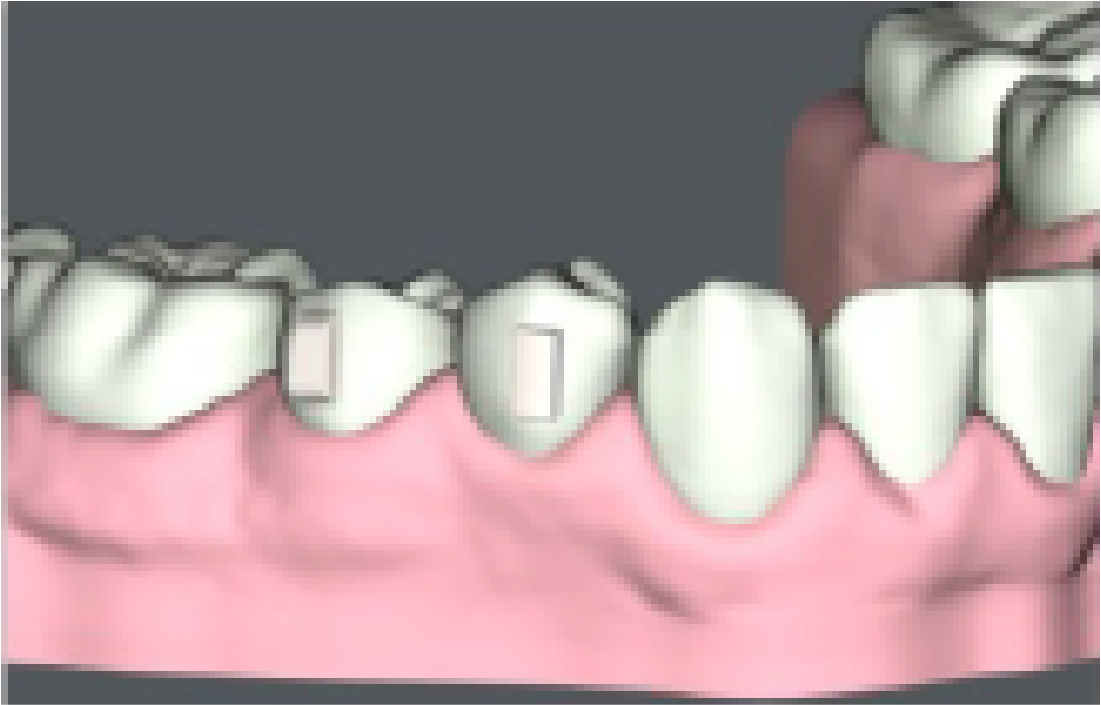
One of the biggest challenges with clear aligners is rotating cylindrical teeth, such as premolars and canines. This is where the biomechanical concept of a “moment of a couple” comes into play. By strategically placing beveled attachments, we create two opposing forces that generate an efficient rotational movement.
For instance, if a premolar is rotated distally, a facially placed attachment with the bevel oriented distally, combined with a lingually placed attachment with the bevel oriented mesially, creates the necessary force couple. This precise placement enhances the aligner’s ability to achieve controlled and predictable rotations, reducing the number of refinements needed.
Rotation
- Vertical rectangular beveled attachments
- Vertical rectangular attachments
2. Extrusions: Lifting with Precision
Extruding teeth—bringing them down into the correct position—can be challenging with clear aligners due to the lack of inherent vertical force. Attachments serve as anchor points that allow aligners to generate the necessary vertical pull.
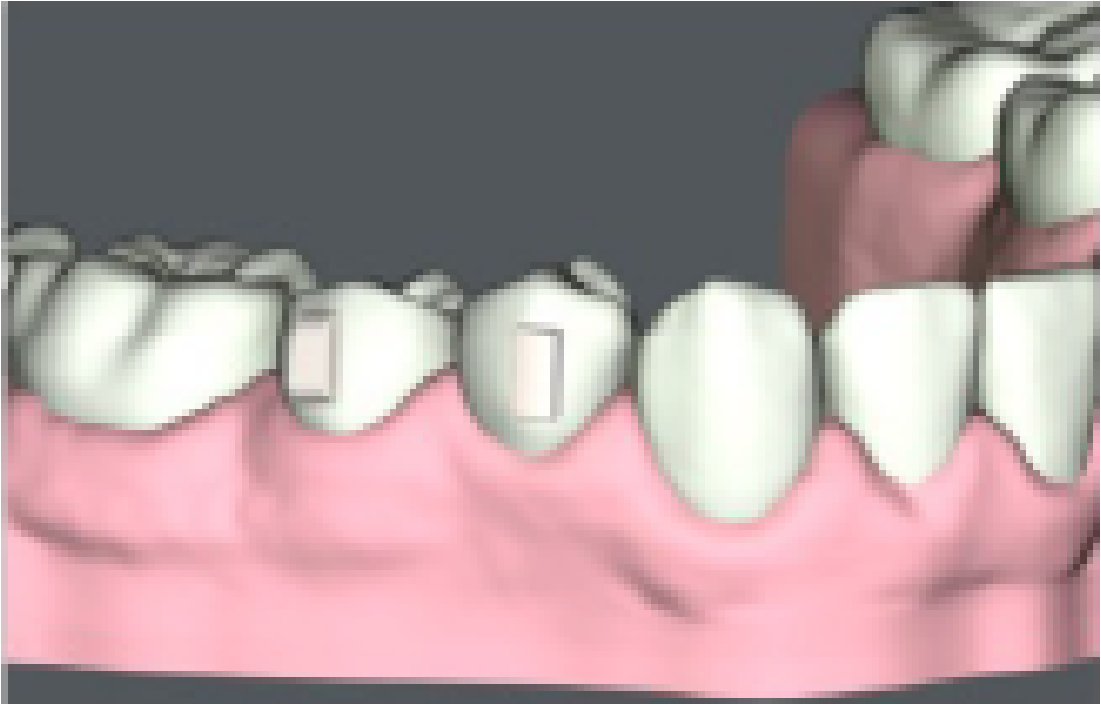
A gingivally beveled rectangular attachment is often used to create an extrusion-friendly surface. This attachment allows the aligner to grasp and guide the tooth downward with each aligner change. Whether addressing a deep bite or improving smile esthetics, strategically placed attachments ensure that extrusion movements occur efficiently and with long-term stability.
Extrusion
- Horozontal rectangular beveled attachments
- Horozontal rectangular beveled attachments
- Horozontal ellipsoidal beveled attachments
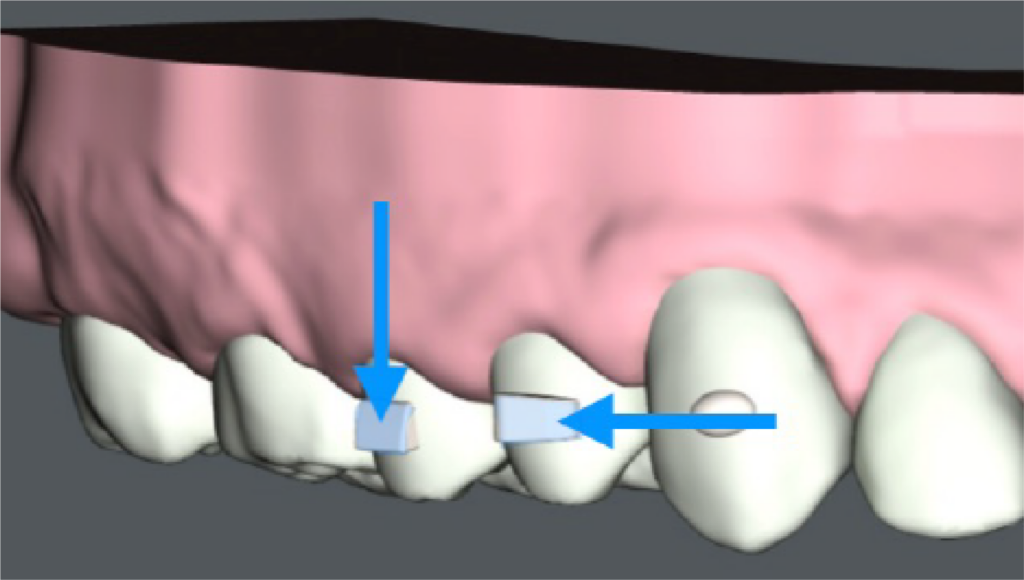
Beveling (Extrusion and Rotation)
The beveled surface is the aera of force application
3. Translations: Moving with Control
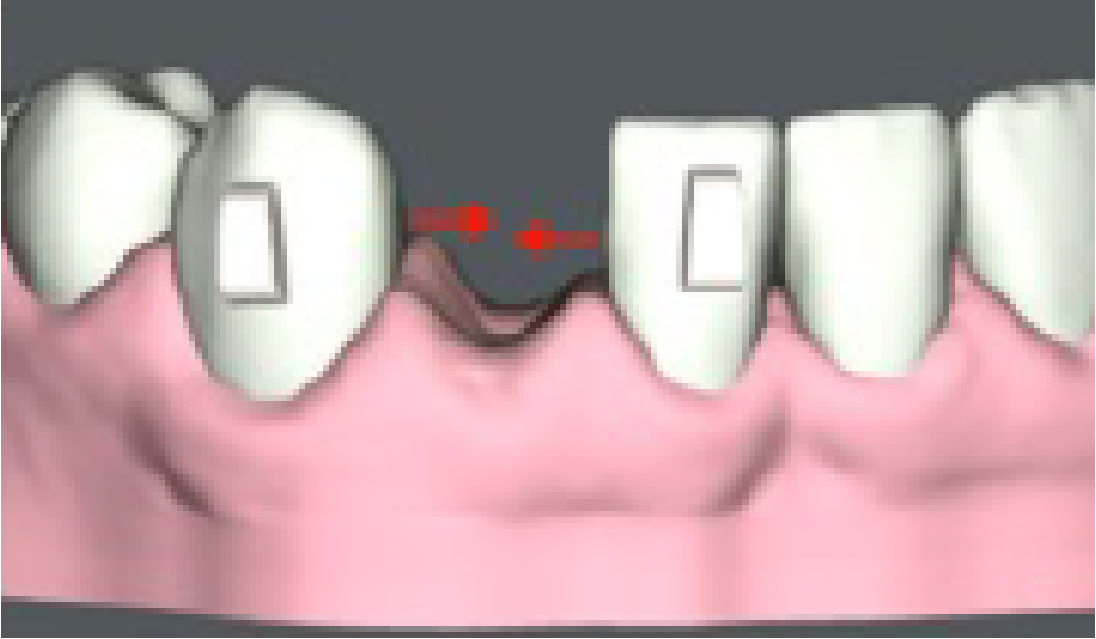
For bodily movements, such as closing spaces or shifting incisors, attachments are crucial for applying uniform force across the tooth surface. Without attachments, the aligner may struggle to generate enough force to bodily move a tooth rather than tipping it.
A vertical rectangular attachment placed at the center of the crown serves as a force distributor, helping the aligner exert consistent pressure across the tooth. This ensures controlled translation, reducing the risk of unwanted tipping and improving overall treatment precision.
Space Closure
- Vertical rectangular attachments


Conclusion: Small Details, Big Impact
Attachments may be small, but their impact on clear aligner treatment is enormous. They turn aligners from passive trays into powerful tools capable of achieving complex movements with predictability and efficiency. By understanding how to leverage attachments for rotations, extrusions, and translations, one can maximize treatment success and deliver stunning smiles with confidence.
For patients, these tiny additions may be unnoticeable, but they make all the difference in ensuring faster, more effective, and more beautiful results.
Related CDOCS Hands-On Workshops
Clear Aligner Excellence for Dentists and Their Teams, Part 1 (CO110)
Launch your aligner journey with a comprehensive introduction to orthodontic fundamentals, occlusion, case selection, and the SureSmile® Aligner system. This workshop equips restorative dentists to confidently plan, present, and manage clear aligner therapy.
Clear Aligner Excellence for Dentists and Their Teams, Part 2 (CO210)
Master advanced techniques such as attachment placement, interproximal reduction (IPR), and treatment timeline management using the SureSmile® system, while integrating digital workflows and refining patient communication strategies for optimal outcomes.