CONE BEAM Article
Legal Implications of Owning a CBCT
Dr. Don Tyndall
CDOCS Faculty

I’m often asked by dentists, “What are the legal implications of owning a cone beam CT unit?” Occasionally this comes in the form of, “Am I responsible for all the cone beam scans that I take?“ Occasionally these questions come expressed as statements such as the following:
“I only charge for a panoramic so that’s I’m all responsible for.” Actually, dentists are responsible for all of the CBCT volumes just like they are responsible for bitewings, panoramic, and two dimensional images, if not legally, certainly ethically.
Another one I hear occasionally is, “I don’t charge for my cone beam CT so I don’t think I’m responsible for its contents.” Again, this is not true. It is understood by all that a free radiograph, often offered along with a new patient dental exam, still needs to be read by a dentist. In most states a dentist is responsible for all of the images that are ordered whether there are two-dimensional or three-dimensional.
These are fair and legitimate questions that reveal many dentists are often unclear or confused about the responsibilities regarding a CBCT scan. The purpose of this blog is to discuss these issues and what dentists are responsible for and how they should manage CBCT acquisition of their patients in their practice.
One thing that is not legal or even wise is to have a patient sign a piece of paper or document that that does not hold their dentist responsible for the contents of the cone beam CT. Usually this is expressed as, “I am not qualified to read these therefore I should not be responsible.” So what do you do in that situation? Again, this is a legitimate question.
The foundational principal here is to protect the patient. That means if the dentist acquiring the cone beam scan is not going to read it then said dentist must find someone that will read the CBCT scan. This is an easy answer as you can refer to an oral and maxillofacial (OMF) radiologist. However, a dentist is not legally bound to send a CBCT scan to an OMF radiologist but is ethically, and in most cases, legally bound to have someone read the volume.
It is highly recommended that all dentists develop a relationship with either an OMF radiologist or a group of them for reading the CBCT scans when there is uncertainty in a CBCT finding. Just as most general dentists have relationships with specialists and specialists with general dentists it is wise for dentists to have a consultative relationships with an OMF radiologist.
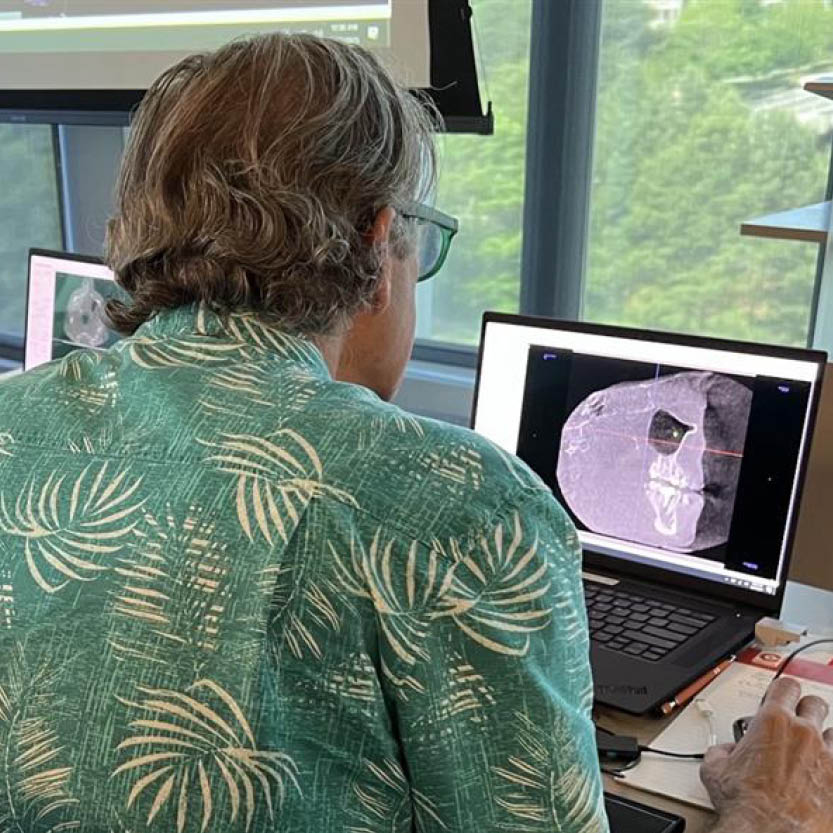
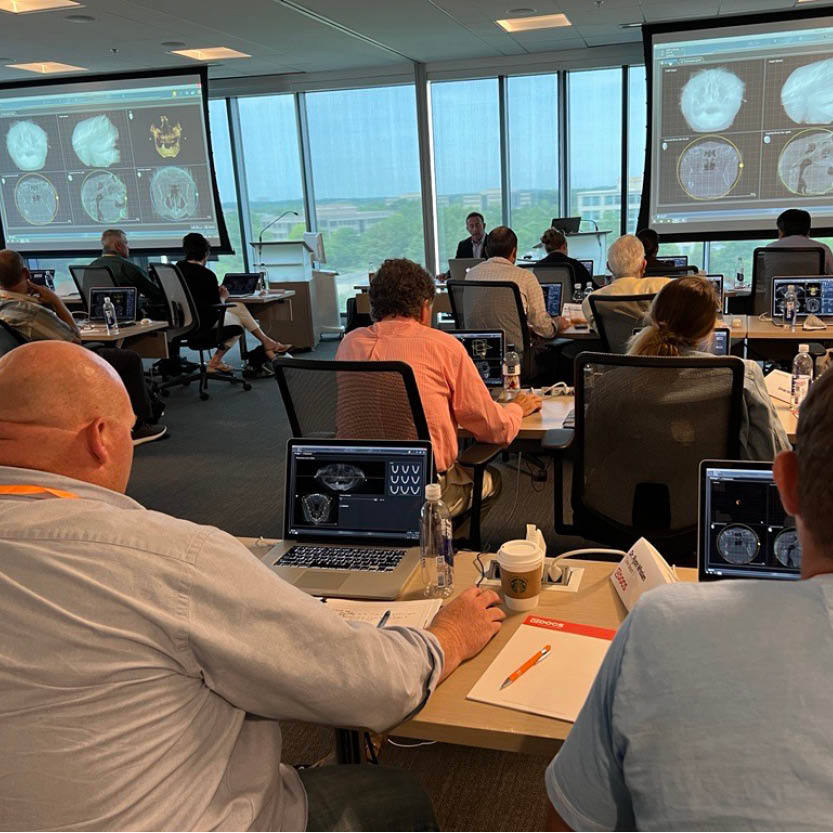
The best way to serve the patient is to make sure that each volume is screened for abnormalities. The dentist doing the screening, if not an OMF radiologist should have had some training, usually a two-day course in how to interpret CBCT volumes. CDOCS offers a two-day course taught by me and Dr. Heidi Kohltfarber where around 80 cases are reviewed by course participants. With such a course the patient and the dentists are protected. I think this is a moral and ethical obligation to the patient that somebody needs to review the volume or have it sent to an OMF radiologist.
One may ask, “What about when a dentist across the hall who doesn’t have a cone beam unit asked me to scan his patient?” Are dentists legally bound in this case because the CBCT scan was acquired in their practice? Most state boards don’t really clarify this. For the dentist’s own protection, he/she should have a signed contract stating that while they are providing an acquisition service for a colleague the colleague who refers a patient is responsible for the CBCT scan interpretation.

Conclusion
In summary the best way to play it safe and best serve your patients is to make sure that each scan acquired in your practice is reviewed, if not by yourself, then by a qualified specialist such as an OMF radiologist.
Related CDOCS Hands-On Workshops
Implementing Cone Beam for Practical Utilization (CB110)
Get comfortable with cone beam technology through hands-on training in CBCT hardware operation, full volume review, and Sidexis and Sicat software suites, including introductions to CAD/CAM integration, airway analysis, and implant and endodontic applications to unlock your system’s full potential.
Maximizing Diagnostic Efficiency with Cone Beam (CB210)
Enhance your ability to systematically review CBCT volumes, identify and categorize radiographic abnormalities, and effectively collaborate with maxillofacial radiologists.