IMPLANT Article
The Advantages of Guided Implant Surgery: Precision, Safety, and Predictability
Dr. Farhad Boltchi
CDOCS Faculty

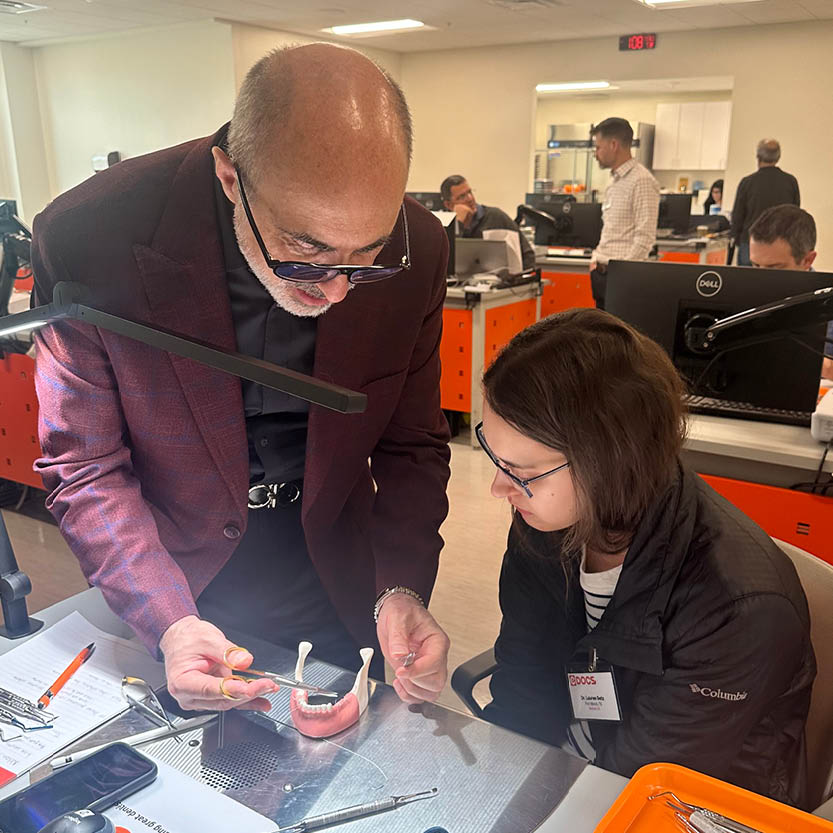
Dental implants have become the gold standard for replacing missing teeth, offering unparalleled function, esthetics, and longevity. However, the success of implant treatment depends heavily on precision — the right placement, angle, and depth are crucial to long-term success. That’s where guided implant surgery comes in.
Guided implant surgery leverages advanced digital technology to pre-plan and virtually simulate the implant placement before the actual procedure. Using 3D imaging (CBCT scans) and specialized software, dentists can fabricate a custom surgical guide that ensures implants are placed exactly where planned.
Let’s explore the key advantages of guided implant surgery for both patients and clinicians.
1. Enhanced Precision and Accuracy
One of the most significant benefits of guided surgery is its extreme accuracy. Using digital planning software and a 3D surgical guide, the clinician can:
- Control the angle, depth, and position of the implant with micromillimeter precision.
- Avoid vital anatomical structures like nerves, sinuses, and blood vessels.
- Ensure optimal placement for both function and esthetics.
This level of precision reduces the risk of complications and increases the long-term success of the implant.
2. Improved Patient Safety
Guided implant surgery is inherently safer due to the meticulous planning that occurs before the surgery. With a digital model of the patient’s anatomy, clinicians can anticipate challenges and avoid risky areas, such as:
- The inferior alveolar nerve in the mandible
- The maxillary sinus in the upper jaw
- Thin bone areas that may not support implants
As a result, guided surgery significantly lowers the risk of surgical errors and post-operative complications.
3. Minimally Invasive Approach
In many cases, guided implant surgery allows for flapless surgery — meaning no large incisions or stitches are required. The benefits of this minimally invasive approach include:
- Less bleeding and swelling
- Reduced pain and discomfort
- Shorter recovery time
- Lower risk of infection
For patients who may be anxious about dental procedures, this gentler approach can make a huge difference.
4. Faster and More Predictable
Because the entire procedure is mapped out in advance, guided implant surgery is often faster and more predictable. With the surgical guide in place, the clinician can perform the procedure efficiently and confidently, reducing chair time and minimizing surprises.
This efficiency is particularly beneficial in:
- Complex cases with multiple implants
- All-on-4 or full-arch restorations
- Patients with challenging anatomy or limited bone volume
5. Better Prosthetic Outcomes
Implants aren’t just about osseointegration — they’re also about the final restoration. Guided implant planning takes the prosthetic end result into account from the beginning. This “prosthetically driven” approach ensures that:
- Implants are positioned to support optimal crown or bridge placement
- The final restoration is both functional and esthetically pleasing
- Bite forces are evenly distributed, reducing wear and complications
This alignment of surgical and restorative goals results in a better long-term outcome for the patient.
6. Higher Patient Satisfaction
With less discomfort, faster healing, and more predictable results, it’s no surprise that patients report higher satisfaction with guided implant surgery. The technology also gives patients greater confidence in their treatment plan, as they can see digital previews and better understand the process.

Conclusion
Guided implant surgery represents the future of dental implantology — a fusion of technology, precision, and patient-centered care. Whether you’re replacing a single tooth or planning a full-arch restoration, guided surgery can lead to safer procedures, faster recovery, and more predictable outcomes.
Case Presentation
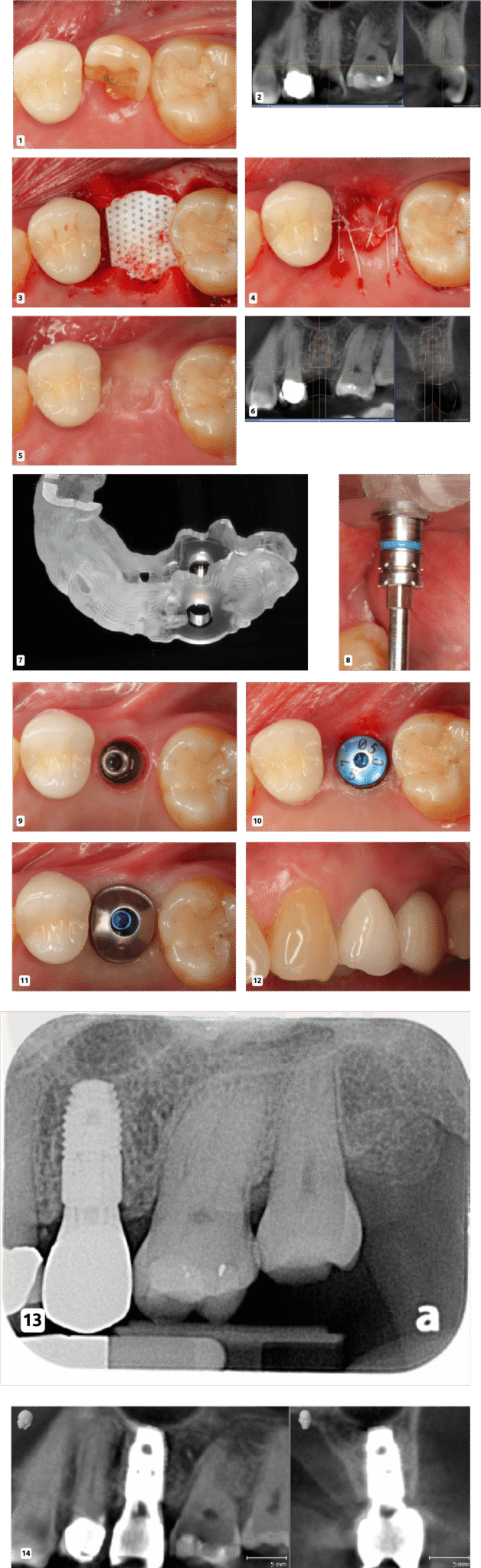
This patient presented with a fractured maxillary second premolar rendering the tooth hopeless. Due to the large root and the fact that the root apex was in close proximity to the maxillary sinus, immediate implant placement was deemed less predictable in this case. Therefore, the following treatment steps were performed sequentially:
- Extraction of the tooth and socket grafting
- Digital restoratively driven implant planning with the SICAT Implant software
- Fabrication of a milled CEREC Guide for placement of an Astra EV implant
- Flapless guided implant placement (6 months after socket grafting)
- Fabrication of a custom tissue former for soft tissue conditioning
- Fabrication of the final screw retained implant restoration (3 months after implant placement)
This case reports highlights all the advantages of guided dental implant surgery leading to a long-term predictable functional and esthetic outcome.
Related CDOCS Hands-On Workshops
Achieving Predictable Results in Guided Implant Surgery (CI210)
Elevate your implant skills with comprehensive training in Cone Beam CT surgical planning, intraoral scanning integration, and the full spectrum of guided surgery systems. This workshop gives clinicians at any experience level the tools to place implants with greater precision and confidence.

Hard and Soft Tissue Grafting in Digital Dental Implant Dentistry (CI250)
Deepen your implant expertise with hands-on training in bone and soft tissue grafting, flap management, socket grafting, sinus lifts, PRF technology, connective tissue harvesting, and complication prevention — building the surgical foundation for complex, predictable implant cases.